
Jump to
Quick answer — how to reduce image file size on your phone
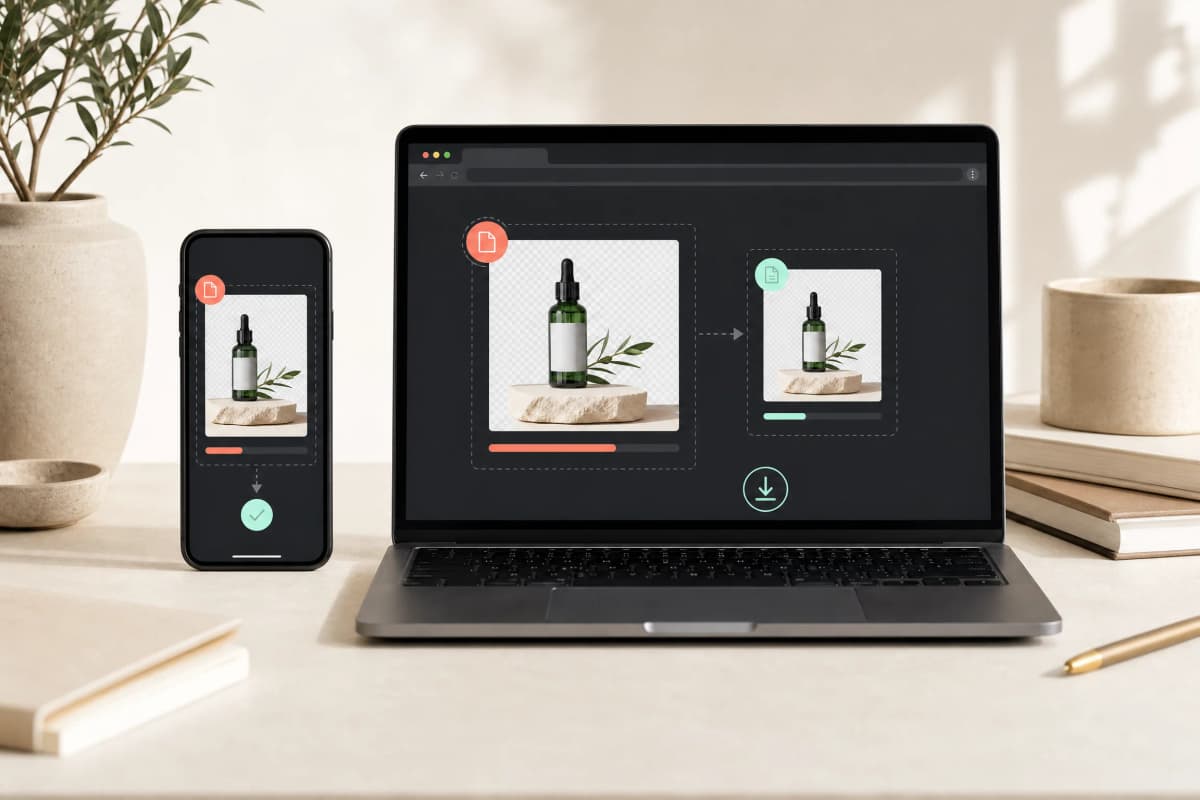
Use a browser-based, client-side tool so the image stays on your device (no upload). If you can change pixel dimensions, resize first — fewer pixels usually gives the biggest file-size reduction. If you must keep the same width and height, apply stronger compression or convert to a more efficient format such as WebP. If a required KB target is impossible at the required pixels, either reduce pixel dimensions, accept a larger file, convert format, or crop the image. Follow the step-by-step browser workflow below for a fast, privacy-first process that works in modern mobile browsers.
Resize vs compress: how to decide
Resizing removes pixels (changes width × height). Compression changes how pixels are encoded (reduces fidelity). Use this quick decision guide:
| Task | What changes | When to choose | Typical effect on quality | Notes |
|---|---|---|---|---|
| Resize | Pixel dimensions | Display size can be smaller (social, web thumbnails) | Often visually acceptable when downscale is moderate | Biggest file-size wins when you resize before compressing |
| Compress | Encoding quality/format | Must keep exact pixel dimensions | Higher compression increases visible artifacts | Converting to WebP can give smaller files for similar look |
| Convert format | File format (for example JPEG to WebP) | A different format is accepted by the recipient | May reduce file size; compare the actual result | Motionix does not create HEIC output |
Use resize when the target is a specific on-screen display size. Use compression or format conversion when the pixel dimensions must stay the same.
Why browser-first matters (privacy and speed)
Processing images in the browser keeps files local to your phone. Modern mobile browsers expose the File API so web pages can read and rewrite files without uploading them. See the File API documentation for platform details on how in-browser tools access files: File API on MDN.
Benefits of client-side processing:
- No upload to remote servers, which improves privacy.
- Faster for many photos because you avoid upload/download time.
- Some tools can work offline after required assets are cached; client-side processing alone does not guarantee offline use.
If privacy is a concern, pick a tool that explicitly states it runs client-side or links to its source code. You can also read Motionix’s privacy-first guidance for image tools on the Motionix blog: privacy-first image tools.
Browser-first step-by-step workflow (iPhone and Android)
If the source is a HEIC photo, first create a compatible JPG copy. The general resizer and compressor do not provide that HEIC decoding step. Keep the original, inspect the conversion, and continue with the downloaded JPG only if further resizing or compression is necessary.
- Open a modern mobile browser (Safari, Chrome, Edge) and visit an in-browser resizer or compressor that advertises client-side processing.
- Tap the control to select a photo. Use the phone picker: Photos or Files on iOS, Gallery or Files on Android.
- Decide whether you must keep the image dimensions:
- If no, set a new width or choose a preset (for web, 1200 px wide is common).
- If yes, leave pixel dimensions and plan to compress/convert.
- Choose format and quality:
- JPEG quality 70–85 often balances size and appearance.
- Try WebP for better size at similar quality when recipient supports it.
- Optionally strip EXIF/metadata to remove location and camera data.
- Preview the output and compare visually at the size it will be viewed.
- Download the processed file and note the save location or use the “Save to Photos/Files” share option.
For batch jobs or preset workflows, use an in-browser batch resizer such as Motionix’s Photo Resizer: in-browser photo resizer.
Where the processed file is saved
- iOS (Safari): Downloads may be saved in the Files app under the browser-configured Downloads location; a Save Image or share action may offer Photos.
- Android (Chrome/Firefox): Downloads commonly appear in the browser or Downloads folder, but the exact location varies by browser, device, and settings; some gallery apps rescan new files.
- If you can’t find it, check the browser’s Downloads view and device file manager, or use the share/save action from the preview.
Always confirm the save path before sending important files.
What to do when your KB target is impossible at the required pixels
If the tool says the KB target cannot be reached without going under a required pixel size, you have these options:
- Reduce pixel dimensions. Smaller width/height affects file size most.
- Try a supported WebP output when the recipient accepts it, then compare actual bytes and detail. HEIC output is not available in this workflow.
- Crop the image to remove unneeded areas.
- Accept a larger file and share via a hosting link or request a higher limit from the recipient.
- Apply stronger compression but verify for visible artifacts; test on the target display size.
If none of these are acceptable, discuss alternatives with the recipient (for example, using a hosted preview or different delivery method).
Practical examples
- Send a photo under 200 KB for messaging: resize to the expected display width (for many phones 1080 px or lower), then reduce JPEG quality in steps (85 → 75 → 65) until you hit the target.
- Prepare a web hero at 1200 × 800 px: resize to those exact pixels, then export as JPEG 80–90 or WebP to balance sharpness and file size.
- Batch compress several images for a gallery: resize to the maximum needed display size first, then apply consistent compression settings.
For a deeper walk-through on resizing to match a file-size target, see Motionix’s guide on resizing to a file size: resizing images to a target file size.
Privacy checklist before you download or share
- Confirm the tool processes files client-side. If the page explicitly states local processing or links to source, that is good.
- Turn off any “include location/EXIF” option to remove metadata.
- Use the browser’s “Save to Files/Photos” instead of sending through a third-party app that might re-upload automatically.
- If uncertain, test with a non-sensitive image first.
Sharing, platform limits, and testing
Preparing a mobile email signature? The Outlook signature guide distinguishes displayed pixels from file size. The photo resizer now includes suggested email-logo and headshot presets; test the received email on your phone rather than relying on the editor preview.
- Messaging apps often recompress images. If you must meet an app’s strict KB, compress and then send the file to yourself first to confirm the final size and quality.
- Web CMSs sometimes recommend or enforce specific dimensions and formats. Check the site or platform requirements before preparing images. Motionix’s article on resizing to a target file size covers common web considerations: resize to file size guide.
- If recipients may not support WebP, either send a JPG fallback or confirm compatibility.
Tools and next steps
- Use an in-browser resizer for quick batch work: Motionix’s Photo Resizer.
- For single-image compression without uploads, try Motionix’s Image Compressor to process photos in your browser: image compressor.
- Remember that browser and OS capabilities change, so keep tools and browsers up to date and re-check compatibility with recipients.
Ready to try a privacy-first, in-browser workflow? Use Motionix’s Image Compressor to resize or compress photos on your phone without uploading them.
Frequently asked questions
Can I reduce image file size on iPhone or Android without uploading?
Yes. Modern mobile browsers support the File API so many web tools can process files entirely in your browser. Choose a tool that states processing is client-side or links to its source. See the File API details on MDN for how browsers access local files.
Should I resize or compress first?
If you can change pixel dimensions, resize first. Reducing the number of pixels has the largest impact on file size. Then apply compression and format conversion as needed.
Will converting to WebP always give a smaller file?
WebP often gives smaller files for the same visual quality, especially for photos. Recipient compatibility varies, so verify that viewers or platforms accept WebP before relying on it.
Where will the compressed file be saved on my phone?
iOS saves via the Files app or Photos when you choose “Save Image.” Android saves to Downloads or a browser-specific folder; check the Files or Downloads app. If unsure, repeat the download and note the save prompt.
How can I remove location info from a phone photo before sending?
Use the tool’s “strip EXIF” or “remove metadata” option to drop GPS and camera data. Alternatively, save a new copy via Files/Photos and use your phone’s share options to exclude location (where available).
What if I need a very small KB but must keep high pixel dimensions?
If a KB target is impossible at the required pixels, your choices are limited: accept a larger file size, change format to a more efficient one, crop the image, or get permission to reduce pixel dimensions. There is no lossless way to force an arbitrary KB target without changing pixels or visual fidelity.
References
- File API documentation — MDN: official source
- Image optimization tips — Shopify: official source
- Motionix blog: privacy-first image tools
- Motionix guide: resize image to file size
- Motionix tool: Photo Resizer
- Motionix tool: Image Compressor
(Platform behavior and browser APIs change over time; check current browser documentation and recipient compatibility before final delivery.)
Related Motionix tools and guides
privacy first image tools · resize image to file size · photo resizer
Keep reading

video ·
Extract a Video Frame as PNG Without a Screenshot
Save a decoded video frame for a thumbnail or document, check the selected moment and dimensions, and avoid mistaking PNG export for video repair.
Read
subtitles ·
Fix Subtitle Timing: Offset or Gradual Drift?
Work out whether subtitles need a constant shift or two-point drift correction, then check the repaired SRT or VTT against your actual video.
Readvideo ·
Make a Video Contact Sheet for a Useful Visual Overview
Create a timestamped grid of video frames, choose sampling that suits your review, and understand what a contact sheet can miss.
ReadConversation
Join the conversation
Share a useful question, correction, or practical tip. Comments are reviewed before they appear.
Loading…