
Jump to
Quick answer (in 100–150 words)
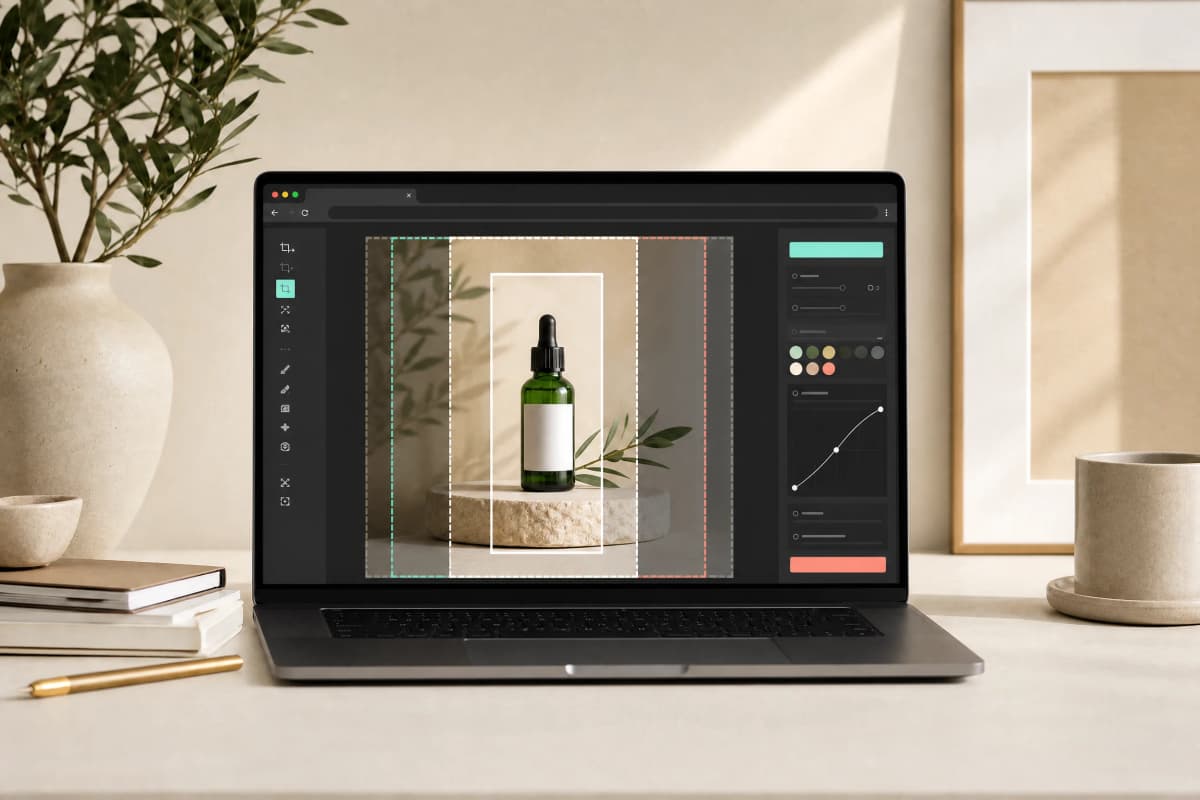
Use 1080 × 1920 px (9:16) as a full-screen Story or design canvas. For a Reels cover, Instagram’s current Help Center recommends 420 × 654 px (1:1.55), and says the cover cannot currently be edited after upload. Keep essential text, logos, and faces inside a central safe area as a design heuristic, not an official platform rule. Export in sRGB, use JPEG for photographs and PNG for graphics or transparency, and check a centered 1:1 crop if the artwork will also appear in a profile grid.
Story canvas, Reels video, cover size, and the safe zone
Use 1080 × 1920 px (9:16) as a common full-screen Story or design canvas. Instagram’s current Reels guidance allows aspect ratios from 1.91:1 to 9:16, while its recommended Reels cover size is 420 × 654 px (1:1.55). Treat the 1080 × 1920 canvas as a design source, not as the official Reels-cover specification.
Why leave a safe zone
- UI elements such as usernames, stickers, and playback controls can overlap the top and bottom of Stories and Reels.
- The profile grid shows a square (1:1) thumbnail, which crops wide vertical artwork.
- Designers commonly leave about 250 px clear at the top and bottom of a 1920 px canvas. That yields an approximate central safe area of 1080 × 1420 px to protect important content.
Treat the safe zone as a guideline, not a guaranteed platform rule. Check Instagram’s official docs if you need the latest requirements: see the Instagram Help Center and the Facebook Business help article in References.
Table: quick reference for Story and Reels cover sizing
| Purpose | Recommended pixels | Aspect ratio | Common safe zone | Best file types |
|---|---|---|---|---|
| Story (full-screen) | 1080 × 1920 px | 9:16 | Central area ~1080 × 1420 px | JPEG (sRGB), PNG |
| Reels cover | 420 × 654 px | 1:1.55 | Check the in-app crop and keep key content clear of overlays | JPEG/PNG as accepted by the upload flow |
| Profile grid preview | Varies; square crop | 1:1 | Center critical elements so they survive square crop | JPEG (sRGB) |
Framing, text and logo placement (practical tips)
- Center primary subjects horizontally and vertically within the safe zone.
- Use large, high-contrast type. Small fine text can become unreadable after upload and compression.
- Avoid placing essential CTAs or contact info close to the top or bottom edges.
- If one image must serve as both a Story/Reel cover and a profile thumbnail, test a 1:1 crop centered on the composition.
- For portraits, keep faces within the safe zone and avoid edge-to-edge tight crops.
Export, color profile and compression
- Color profile: export in sRGB for consistent color across devices.
- Photos: export as JPEG at quality 70–85. This balances file size and tolerance for Instagram compression.
- Graphics/illustrations: use PNG when you need sharp edges or transparency. PNG files are larger and may still be recompressed by the platform.
- Minimum practical width: start at 1080 px width. Very small images force Instagram to upscale and can increase visible compression.
- After exporting, preview on a smartphone to check for banding, blurring or unreadable text.
Step-by-step: prepare a Story / Reels cover
- Create a 1080 × 1920 px canvas in sRGB.
- Place the main subject and any logos/text within the center ~1080 × 1420 px safe zone.
- Set type size large and check contrast against your background; add a semi-opaque overlay if needed.
- Export: JPEG (sRGB) at 70–85 for photos, PNG for graphics/transparency.
- Preview a centered 1:1 crop to see the profile grid thumbnail.
- If file size is high, compress and re-check for visual artifacts.
Workflow resources and tools
- Resize photos for every social network: see Resize photos for social media.
- Fix soft or blurry uploads: see How to fix blurry images on the web.
- Compress images without noticeable artifacts: try the Motionix image compressor.
- Quickly create a 1080 × 1920 px file: use Motionix Photo Resizer.
Note: platform behavior, upload limits and visual treatment can change. When you need absolute current specs, consult Instagram/Meta documentation linked in References.
Frequently asked questions
What pixel size should I use for an Instagram Story or Reels cover?
Use 1080 × 1920 px (9:16) for a full-screen Story or design source. For a Reels cover, Instagram’s current Help Center recommends 420 × 654 px (1:1.55). Check the in-app crop and current help guidance before publishing.
Will a Reels cover be cropped on my profile grid?
Yes. The profile grid displays a square thumbnail. Keep key elements centered so they survive a 1:1 crop.
Should I upload PNG or JPEG for a cover image?
Use JPEG (sRGB) for photographic content and PNG for graphics that require transparency or very sharp edges. Both may be recompressed by Instagram.
How large should my text and logos be?
Make text and logos large enough to be readable on small phone screens after compression. Use high contrast and test on a mobile device.
Why does my cover look blurry after uploading?
Blurriness often comes from low source resolution, heavy prior compression, or platform recompression. Start with a 1080 × 1920 source and export at decent quality before upload. If needed, run a controlled compression and re-check.
Are the safe zone measurements official?
No. The ~1080 × 1420 px safe zone is a common design practice to avoid UI overlays and cropping. It is not an official Instagram rule. Verify current requirements in the official help documents linked below.
Ready to make a cover? Use Motionix Photo Resizer to create a 1080 × 1920 px file and then compress it with our image compressor before uploading.
References
- Instagram Help Center: Reel size, aspect ratios, and cover size. official source
- Facebook Business Help: image and video recommendations. official source
Related Motionix tools and guides
resize photos social media · images blurry on web · image compressor
Keep reading
linkedin profile picture size ·
LinkedIn Profile Picture Size: Dimensions, Crop, and Quality
Practical specification guide for choosing and exporting the right LinkedIn profile picture size, crop, and quality — separates LinkedIn's official guidance from Motionix export defaults, explains square crop, face-safe margins, lighting, and why higher-resolution sources withstand recompression.
Read
video ·
Extract a Video Frame as PNG Without a Screenshot
Save a decoded video frame for a thumbnail or document, check the selected moment and dimensions, and avoid mistaking PNG export for video repair.
Read
subtitles ·
Fix Subtitle Timing: Offset or Gradual Drift?
Work out whether subtitles need a constant shift or two-point drift correction, then check the repaired SRT or VTT against your actual video.
ReadConversation
Join the conversation
Share a useful question, correction, or practical tip. Comments are reviewed before they appear.
Loading…